Content is everywhere. Why is it so hard to find new ideas then?

Shot by Rasul Adasov.
In this article, we’ll look at unusual ways to overcome creative block and help you get to your first draft faster.
Scrolling at 14 RPM (reels per minute)
If you were to pick up your phone right now and head over to the reels tab on Instagram, it would be easy to keep scrolling for hours straight. Not necessarily a bad thing, unless it eats up 50% of your screen time. Every year, there is more and more content to consume, because the entry barrier to create gets lower and lower. For example, you can cut out all silences for a podcast video with a single click. Needing captions? Automatically transcribe your audio and sync text in a few seconds. All of which was unheard of before.
When there is more content to consume than people who can consume, an interesting phenomenon takes place: information overload. Your brain can only handle so much. As a result, it needs to efficiently manage where to put energy into and what pieces to forget. This is also why you almost certainly don’t remember the last reel you watched.
And here’s the problem: most creators justify scrolling to learn something new and grow on a personal level. While this may be true, more often than not, it occurs more subconsciously, since it has already become a habit. Because your brain is lazy, it just needs to find the most viable excuse.
Instead, be mindful the next time you’re watching reels. Tell yourself that you’ll be actively looking for inspiration. Scroll past memes and other low-quality content that does not add any value to your session. As a best practice, you’ll want to train the feeds of different accounts to suggest relevant content. Then, you can easily switch between wind-down and inspiration mode.
Don’t worry about budget
For a moment, imagine yourself in a world where you could have any gear you want at the snap of your finger. Render times are now a problem of the past, your camera is more than enough to start filming YouTube videos and you have so much RAM that you can easily play back 4K compositions in After Effects in real-time. Sounds good, so what would you like to start creating?
Nine out of ten times, the outcome would look something like this: you’d be highly motivated to start working on your new project, eventually hit a roadblock and get frustrated. Then after a few days, something new and shiny catches your attention, you let go of that old idea and the cycle repeats. Because there are so many options to choose from, the incentive to keep pushing and finding solutions gets incredibly low.
In these cases, limitations would simply cause fewer headaches. Professionals in film production industries deal with budget constraints all the time, yet they manage to overcome these obstacles and craft magical results. When there are fewer things to worry about, you have more time to think about solving actual problems. Now, how does this apply to most artists?
Let’s say you’re a student who’s excited to learn about rendering in Blender, but you have an outdated graphics card. Instead of creating high-fidelity environments, you can invest time in learning about motion graphics and simple product renders that can be easily done with EEVEE — a much lighter alternative on your GPU.
 Create Infinities, Futureblur’s premier creator event in 2024 was developed and rendered within a single week. Initially, the project was designed with the Cycles rendering engine in mind. Due to the time constraint, however, many scenes were omitted and all lighting was built from scratch to look correctly in EEVEE.
Sometimes, the best results emerge from the most constrained environments. Get creative. There are a million ways to approach limitations. And upgrading your hardware should always be a last resort.
Move fast, break everything
“Learn the rules like a pro, so you can break them like an artist.” is a famous quote by Pablo Picasso. Knowing when to iterate on an idea and when to move on is an incredibly important skill that can only be achieved by playing and experimenting. When you first learn about how things are supposed to be done, it becomes hard to move out of your comfort zone.
Fast forward a few years later, you’ll realize that your first draft rarely makes its way into the final result — which is a good thing, because it shows a sign of growth. Do not follow guidelines as if they were rules. Become a trend-setter.
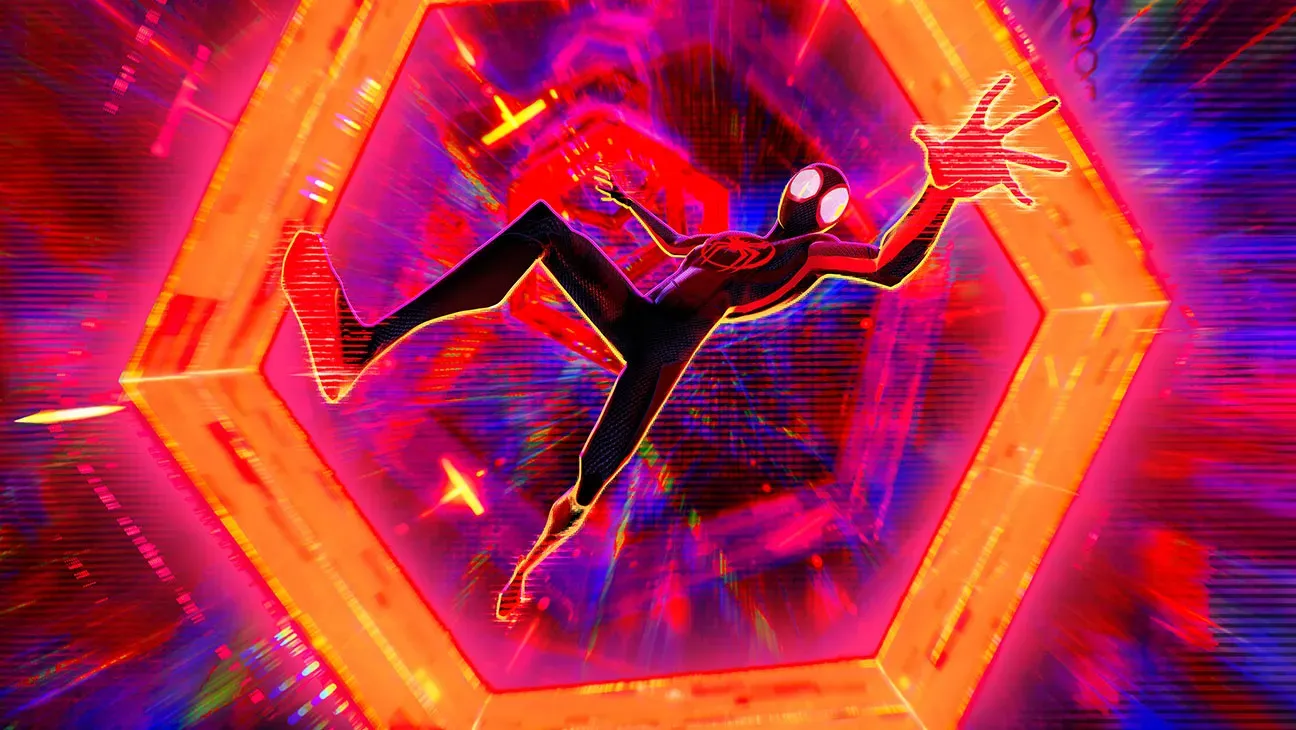 In Spider-Man: Across the Spider-Verse, Sony took a completely new approach to animation and shading that inspired many other movies to come.
Arms wide open
Lastly, actively seeking out opportunities to network with other fellow artists can be a huge creativity boost. Cross-disciplinary collaboration sheds light on unusual combinations and aids in discovering new worlds. Sometimes, generating ideas can be as easy as looking at things through a different lens, with different people.